A strong association between maternal smoking and Autism has been well documented. Researchers have also identified a strong association between gestational exposure to pesticides and Autism.
Unfortunately, neither Autism researchers nor science & medicine in general seem aware of the underlying connection between the two – which is that every cigarette smoked by every pregnant woman since the 1950s has been contaminated with multiple pesticides that are now (2025) known to create elevated Autism risks for their developing child.
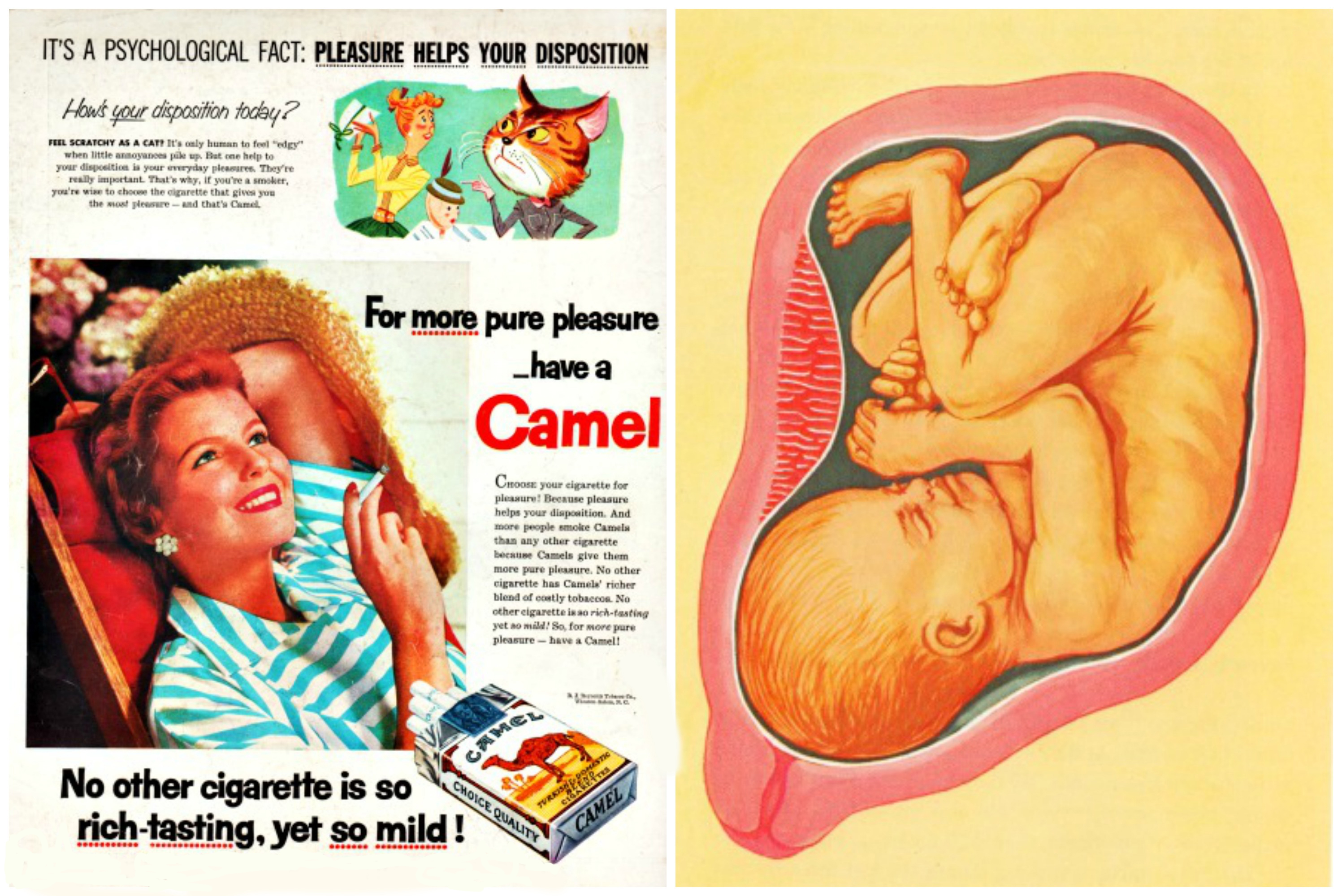
This point bears repeating: Every child born to every smoking mother from 1950 to 2025 has been exposed to multiple pesticides throughout their gestational development, and here are the organochlorines that began it all – contaminating every cigarette throughout the 50s and 60s:
| Pesticide | First Registration Date |
|---|---|
| DDT | 1945 |
| Aldrin | 1948 |
| Dieldrin | 1950 |
| Heptachlor | 1952 |
| Chlordane | 1954 |
| Endrin | 1950 |
| Toxaphene | 1947 |
Every one of these organochlorines was fully documented in published research of the times as a contaminant of the cigarettes smoked by pregnant women throughout the 50s & 60s and into the 70s. At least one of them, DDT, still contaminates the flavored little cigars currently smoked by millions of young men and women, in spite of having been banned worldwide since 1972. This meant that DDT is definitely being used on tobacco fields somewhere right now, and that DDT is being inhaled by young pregnant smokers right now.
Does this suggest any new insights into the epidemiology of Autism today?
Here’s how science and medicine view the link between pesticide exposure and Autism (more examples later).
“Considering Toxic Chemicals in the Etiology of Autism”
https://doi.org/10.1542/peds.2021-053012
“Several studies suggest that gestational exposures to some neurotoxic and endocrine-disrupting pesticides, including organochlorines, organophosphates, and pyrethroids, increase the chances of an autism diagnosis or autism-related behaviors in children.”
“Other pieces of compelling evidence also underscore the interaction of genetic susceptibility with toxic chemicals as a major contributor to autism. Researchers analyzing 206 genes from an established genomics database against a database that records the activities of >10 000 chemicals on genes and gene-pathways found that 4428 chemicals interacted with one or more of the genes linked to autism.”
In the first study of its kind since the 1970s, the Government of Saudi Arabia studied the major imported cigarette brands, and confirmed that the pesticide contamination of cigarettes that began in the 1950s continues and has widened and accelerated.

Now here’s a few examples of how science and medicine see the link between maternal smoking and Autism.
Maternal smoking and autism spectrum disorder: meta-analysis with population smoking metrics as moderators
https://doi.org/10.1038/s41598-017-04413-1
“Our study shows that using population-level smoking metrics uncovers significant relationships between maternal smoking and ASD risk.”
Neurodevelopmental Disorders and Environmental Toxicants: Epigenetics as an Underlying Mechanism
https://doi.org/10.1155/2017/7526592
“A mother-child cohort study of 1113 families in France that followed the child up to 5 years of age showed that maternal smoking predicted high symptoms of hyperactivity or inattention. A Finish cohort study with more than 50,000 participants showed that, after adjusting for confounding factors, maternal smoking, no matter whether only in the first trimester or continuing after the first trimester, is associated with an increased risk for ADHD. Another study that followed the child up to 15 years of age showed that maternal smoking of more than 10 cigarettes/day increased the risk for Tourette syndrome, Tourette syndrome comorbid with ADHD, and chronic tic disorders.”
And finally, science and medicine have found that a grandmother’s smoking during her pregnancy 50-60 years ago increases her grandchildren’s risk of Autism today in 2025 – again, without knowing that 50-60 years ago she would have been inhaling significant concentrations of multiple Organochlorines and Organophosphates with every puff.
Multigenerational association between smoking and autism spectrum disorder: findings from a nationwide prospective cohort study
https://academic.oup.com/aje/article-abstract/193/8/1115/7641607
“Our results suggest a potential persistent impact of gestational exposure to environmental insults across 3 generations.”
However, even with all these parallel findings in hand, science and medicine have yet to connect maternal/grandmaternal smoking with pesticide exposure. This is very likely because of the complete absence of published research on the pesticides inhaled in cigarette smoke and their impact on human health, including Autism in the children and grandchildren of smokers.
Beginning in the 50s and 60s cigarette pesticides were the Organochlorines, the first class of insecticides that included DDT, Toxaphene, Heptachlor and Chlordane, and since then cigarettes and all other tobacco products have been contaminated with every new class in succession, from the Organophosphates and Carbamates in the 80s and 90s to today’s Neonicotinoids and Pyrethrins.
However, beginning with the early 1970s, when the tobacco industry realized what their contaminated products were actually doing to smokers, all tobacco pesticide research came to a full stop. Where there had previously been multiple university-published research journals on tobacco pesticides, there hasn’t been a single published study in the US on pesticide contaminants of tobacco products since the 70s, so neither the scientific and medical communities nor the public today have had any way of making the connection or knowing the magnitude and scope of the risk, or any hope of identifying the therapeutic possibilities.
Once you stop thinking it’s the tobacco causing smoking-related disease and start thinking it’s the pesticides, the entire medical, scientific and regulatory picture changes radically.
“Alarming Increase in the Prevalence of Autism: Should We Worry About Pesticides?”
“As society substituted organochlorines with organophosphates, then pyrethroids and more recently neonicotinoids, we left a legacy of health issues that can transcend generations and lead to yet unidentified consequences.”
Exposure through inhalation is unique in that inhaled pesticides are absorbed into the blood where they are conveyed directly to the brain and organs without first passing through the detoxifying liver, as happens with dietary exposure. We know that many of these inhaled pesticides directly and easily cross the placental barrier, continuously exposing the developing child throughout their neurological development. And let’s not forget, this has been going on since the early 1950s.
Tipping the Balance of Autism Risk: Potential Mechanisms Linking Pesticides and Autism
https://pmc.ncbi.nlm.nih.gov/articles/PMC3404662/
“Conclusive replicated findings have yet to appear on any specific exposure; however, mounting evidence suggests gestational pesticides exposures are strong candidates.”
Autism Spectrum Disorder and Prenatal or Early Life Exposure to Pesticides: A Short Review
https://pmc.ncbi.nlm.nih.gov/articles/PMC8535369/
“Among the different environmental pollutants, pesticides should be considered as emerging risk factors for ASD.”
Polychlorinated Biphenyl and Organochlorine Pesticide Concentrations in Maternal Mid-Pregnancy Serum Samples: Association with Autism Spectrum Disorder and Intellectual Disability
https://ehp.niehs.nih.gov/doi/10.1289/ehp277
“Our results suggest higher levels of some organochlorine compounds during pregnancy are associated with ASD and ID.”
Finally, here is a breathtaking graphic by Autisme Montreal that summarizes the impact of pesticide exposure at each point in a child’s gestational development.

“Among the insecticides that have been identified to be associated with autism are DDT and its derivative DDE, chlorpyrifos, diazinon, malathion, avermectin, permethrin, cypermethrin, bifenthrin, imidacloprid, dicofol, endosulfan, and methyl bromide. Beside insecticides, herbicides glyphosate, and ammonium glufosinate and fungicides myclobutanil, phosphine, pyraclostrobin, trifloxystrobin, famoxadone and fenamidone and rodenticides rotenone have also been listed in studies showing correlations with autism.” https://autisme-montreal.com/en/
Notice that seven of these pesticides were found in US tobacco products in this 2018 study conducted for my book Smoke No Evil.
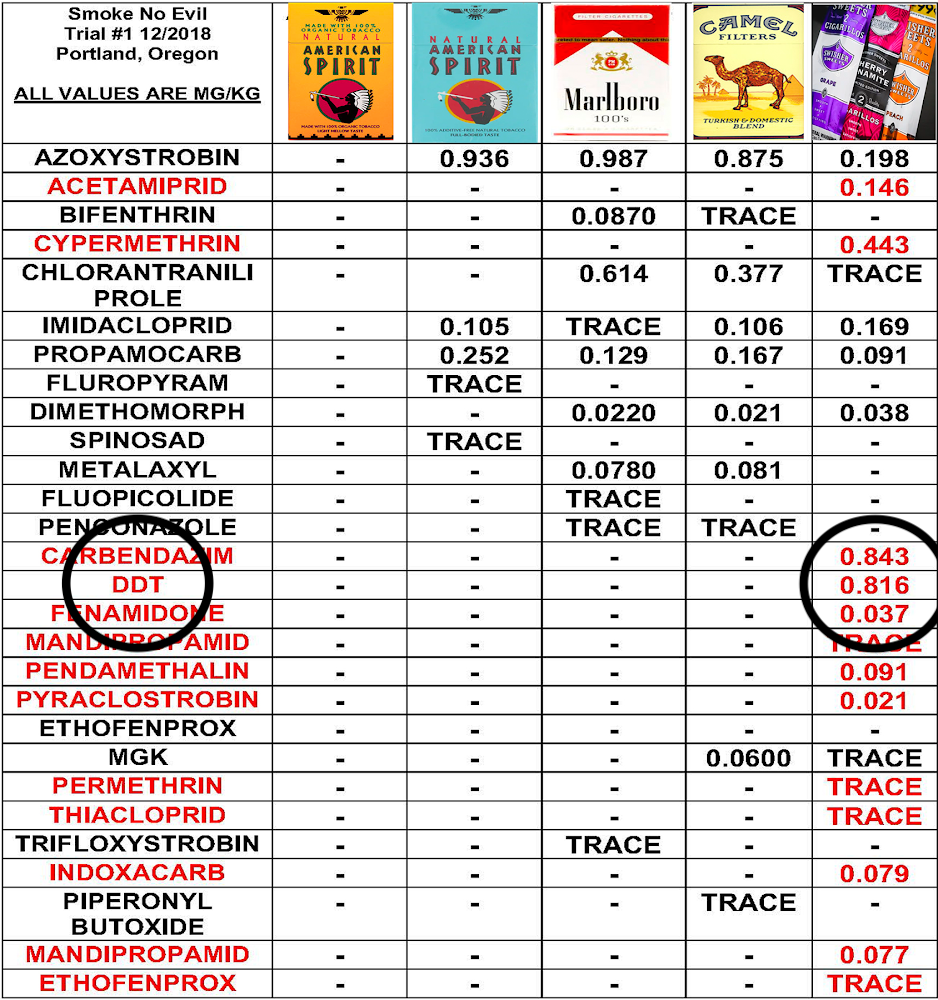
“The ramifications of pesticide exposure are potentially devastating to unborn fetuses, and very young children, with a large range of neurodevelopmental risks, making pesticide exposure a public health challenge. While pesticides are one class of the many potential environmental toxicants associated with the development of autism, it is one that can and must be collectively acted upon to protect early brain development.
“Society can no longer afford to turn a blind eye to this issue. The risks and the costs involved are just too high. The motivations for approving the use of pesticides must not and cannot be to the detriment of public health and safety. Collective and proactive efforts must be undertaken to limit human exposure to pesticides particularly during critical periods of life, such as during pregnancy and early childhood.”
Autisme Quebec
A Path To Harm Reduction
American Spirit organic tobacco cigarettes prove that is possible to produce popular and commercially viable tobacco products that are free of pesticide residues. There is no reason that the entire tobacco industry can’t produce 100% pesticide-free products, including organic tobacco natural menthol cigarettes, which could be implemented with a 5-year progressive ban on pesticides in all tobacco products.
Since there has been no research investigating the health impact of smoking uncontaminated tobacco products, we can’t conclusively make the argument that smoking tobacco without pesticide residues would be less harmful than smoking pesticide-contaminated tobacco, but since we know how harmful pesticides are, we can be sure that removing them would go a long way toward reducing the harm to future generations from maternal smoking.


 panaceachronicles