Did your Mother or Grandmother smoke cigarettes any time during the years 1950-1980? Depending on the decade, 30-40% of American women smoked during this period, and for the most part they didn’t stop for pregnancy. In fact, she was encouraged by both tobacco companies and doctors.
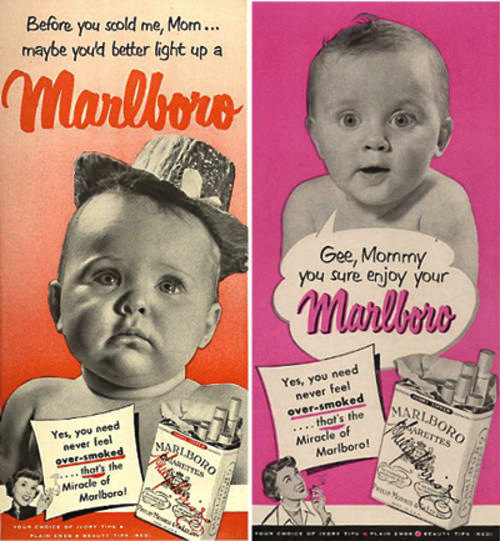
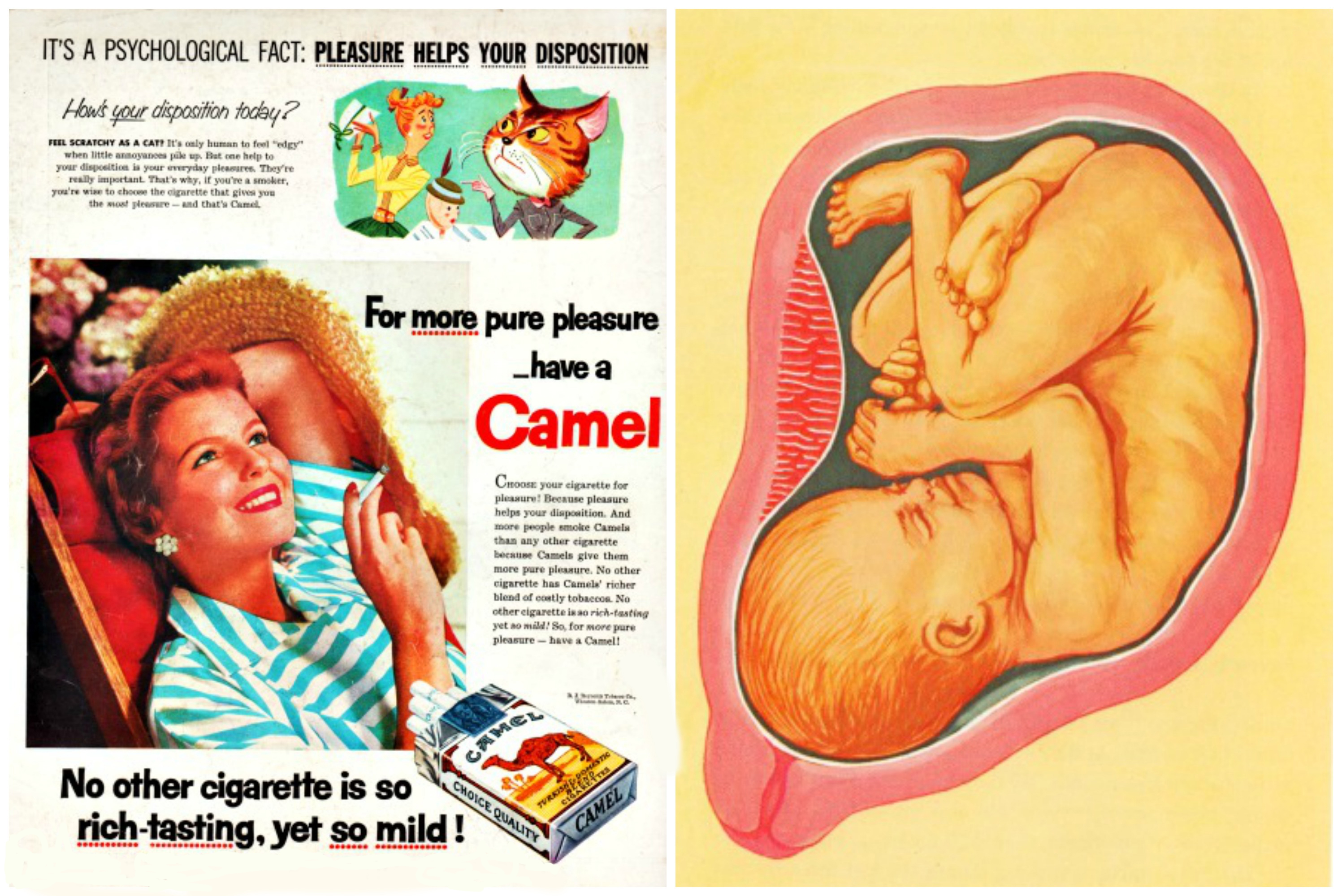
If she smoked during this period, before or during her pregnancy, your mother or grandmother was inhaling heavy concentrations of DDT along with significant concentrations of dieldrin, heptachlor, lindane, BHC, aldrin, chlordane, endosufan and toxaphene, with every puff. Each of these pesticides was used heavily on tobacco crops in the US and worldwide from the very first date of registration.
| Pesticide | First Registration Date |
|---|---|
| DDT | 1945 |
| Aldrin | 1948 |
| Dieldrin | 1950 |
| Heptachlor | 1952 |
| Chlordane | 1954 |
| Endrin | 1950 |
| Toxaphene | 1947 |
Because of that, a major new research study says, whatever your age or gender, you should be checking your breasts or testicles very carefully and very often for those telltale lumps. Here’s why.
If you’re a woman, the original smoker’s exposure to DDT means that you as a child or grandchild have a seriously increased (5X) risk of developing ER+ breast cancer beginning before age 50. (See the newly published research below)
If you’re a man, the original smoker’s exposure to DDT means that you as a child or grandchild have a seriously increased risk of developing testicular cancer beginning before age 30.
New published research (see below) shows very high rates of breast cancers and testicular cancers in both the children and grandchildren of women who were exposed to DDT not through smoking but because they lived and worked in contaminated agricultural areas of California prior to 1980.
HOWEVER, that’s only a small part of the long-ago DDT exposure story. The whole story includes absolutely everyone who smoked cigarettes during those years, because every cigarette was contaminated heavily with DDT, and that goes a long way toward explaining the current breast and testicular cancer epidemics (and the Diabetes and Obesity epidemics, by the way) that began in the 1980s. While the women in the breast cancer study were only exposed by intermittently inhaling DDT from the farming environment, smokers throughout the country were inhaling DDT and other organochlorines daily with every puff – although that fact and its implications have never been acknowledged much less studied.
If there’s any doubt that nationwide DDT exposure didn’t just occur with environmental exposure in agricultural areas, here’s the evidence that all US cigarette brands from 1950-1980 were heavily contaminated with DDT. This is straight from the US Public Health Service:
Agency for Toxic Substances and Disease Registry (ATSDR). 2022. “Toxicological Profile for DDT, DDE, DDD .”
Atlanta, GA: U.S. Department of Health and Human Services, Public Health Service.
Toxicological Profile for DDT, DDE, and DDD
“Djordjevic et al. (1995) assessed the chlorinated pesticide residues in U.S. and foreign cigarettes manufactured from the 1960s to the 1990s. Concentration ranges of DDT-related compounds in samples of cigarettes manufactured between 1961 and 1979 and between 1983 and 1994 were:
p,p’-DDT,
(1961–1979 levels) 720–13,390 ng/g, (Ed. note: 13,390 ng/g is approximately equal to 13.99 ppm)
o,p’-DDT,
(1961–1979 levels) 105–1,940 ng/g;
p,p’-DDE,
(1961–1979 levels) 58– 959 ng/g,
p,p’-DDD,
(1961–1979 levels) 1,540–30,100 ng/g (Ed. note: 30,100 ng/g is approximately equal to 30.1 ppm.)
o,p’-DDD,
(1961–1979 levels) 396–7,150 ng/g,
p,p’-DDMU (1-chloro-2,2-bis(p-chlorophenyl)ethylene),
(1961–1979 levels) 92.7–2,110 ng/g,
“The transfer rate from tobacco into mainstream smoke amounts to 22% for DDD, 19% for DDT, and 27% for DDE.” (p. 332)
During the period 1950-1980 +/-40% of adult women smoked. During this period live births averaged around 4 million children a year, so it’s reasonable to assume that 1 million of them were born to smoking mothers.
In fact, smoking during pregnancy was recommended by many doctors, who were acting as paid shills for the Tobacco Cartel.

And, even if a young woman stopped smoking during pregnancy, which many did not, if she had been a regular smoker before pregnancy then DDT had already saturated her body tissues.
This means that every child born to a smoking mother between 1950-1980 was exposed to genetic damage by DDT circulating continuously in fetal tissues throughout their pre-birth development.
In the years 1950-1980 approximately 100 million children were born; and by my estimate +/- 20 million of them were exposed to genetic damage by DDT from their mother’s cigarettes.
Here’s research showing that this genetic damage from DDT appears after a 40 year latency period as breast cancer in females, including the daughters and granddaughters of smokers.
DDT and Breast Cancer: Prospective Study of Induction Time and Susceptibility Windows
Journal of the National Cancer Institute, Volume 111, Issue 8, August 2019, Pages 803–810
https://academic.oup.com/jnci/article/111/8/803/5299924
Different Risk Patterns
“… results suggest that women who were first exposed to DDT in infancy had earlier onset of breast cancer (diagnosed at age <50 years) and those who were first exposed to DDT after infancy had later onset of breast cancer (diagnosed at ages 50–54 years).”
500% Increased Risk of Breast Cancer Before Age 50
“In a previous Child Health and Development Studies report, p, p’-DDT was associated with a fivefold increased risk of premenopausal (before age 50 years) breast cancer for women first exposed before puberty.”
Double Early Post-Menopause Risk
“For early postmenopausal breast cancer, any p, p’-DDT exposure was associated with increased risk for all women. Specifically, their risk was almost double compared to those who had never been exposed to DDT. The levels of increased risk vary by when in their lives women are exposed.”
Conclusions
“p, p’-DDT was associated with breast cancer through age 54 years. Risk depended on timing of first exposure and diagnosis age, suggesting susceptibility windows and an induction period beginning in early life. DDT appears to be an endocrine disruptor with responsive breast targets from in utero to menopause.”
And here’s the research that documents the rise in testicular cancer in sons and grandsons of DDT-exposed women – meaning every woman who smoked from 1950-1970:
“Prenatal DDT Exposure and Testicular Cancer: A Nested Case-Control Study”Archives of Environmental & Occupational Health
Volume 65, 2010 – Issue 3
https://www.ncbi.nlm.nih.gov/pmc/articles/PMC2936455
“Testicular cancer incidence rose dramatically worldwide among birth cohorts born after 1945, implicating a widespread environmental exposure. The widespread introduction of commercial DDT in 1945 coincides with the increase in testicular cancer incidence. The persistence of p,p′-DDE, a potent anti-androgenic DDT metabolite, is of particular concern.”
“The similar findings for time to pregnancy in women and testicular cancer in men of the same generation of the CHDS cohort are unlikely to be serendipitous, and support the alternative idea that p,p′-DDT, an intermediate metabolite, or another exposure that shares its metabolic pathway, may be a reproductive toxin and/or a carcinogen.”
The breast cancer research cited above followed 15,000+ women for 50+ years beginning in 1959 and clearly shows that early DDT exposure creates up to a 500% increased risk of pre-menopausal breast cancer in women exposed to DDT before puberty, including during gestation, and that’s an elevated risk that’s passed on to their daughters and granddaughters even if those women are never themselves exposed to DDT. Further, it shows an equally elevated risk of early testicular cancer in sons and grandsons.
This study also found that there is a roughly 40-year latency period between environmental DDT exposure and initiation of first detectable breast cancers among these exposed women. Even more disturbing, it turns out that there is also a roughly 40-year latency period for daughters exposed in utero, and then also for granddaughters.
Many of the 15,000+ women in this study were regularly exposed to DDT throughout their lives because they lived in agricultural areas of California prior to the global ban on DDT. Detailed Kaiser clinical records from 1959-1967 documented their health conditions in detail, including their DDT blood levels, including their placental blood DDT levels at childbirth, so their health status, along with the health of their daughters and sons, and their grandchildren, can be followed retrospectively.
Neither of these studies were directed at smoking in any way – this research was 100% about environmental DDT exposure. The results document the increased breast cancer risk from environmental DDT exposure, not from smoking. The 2019 researchers had no idea that millions of women were being exposed to DDT in cigarettes during this same period. They were focused on the harm done by DDT to women living and working in agricultural areas.
So in plain language, tens of millions of children born 1950-1980 to mothers who smoked cigarettes were bathed in DDT throughout their fetal development.
I know that correlation doesn’t mean causation but:
Breast cancers that develop in response to DDT exposure are predominantly (83%) estrogen-receptor positive tumors, and ER+ tumors have been a dominant type of Breast Cancer in trends beginning in the 1980s.
https://jamanetwork.com/journals/jamanetworkopen/fullarticle/2814306
This 30-year period, 1950-1980, of DDT and the other organochlorines being inhaled multiple times daily through smoking cigarettes, represents by far the longest, broadest pesticide exposure of women in history. After a 40-year latency period, the breast cancer epidemic first began showing itself.
Anywhere from 40-50% of women smoked during these decades, and smoking during pregnancy was medically encouraged in the 50s and early 60s. “The one doctors recommend”.

Later, in the 70s, tobacco companies clumsily tried to tie “freedom to smoke” to the powerful Women’s Liberation movement with the curious sneer “You’ve come a long way, Baby!”.

The association between smoking and breast cancer is well-established, but the presence of DDT and other pesticides in tobacco products is virtually unknown and un-studied.
The wave of breast cancer among women who smoked 1950-1980 began emerging in the 1990s (the first 40-year cohort) and continues to increase.
This wave is heavily concentrated in estrogen-receptor positive tumors, and breast cancers that develop in response to DDT exposure are 83% estrogen-receptor positive tumors.
Maybe the two major studies cited above aren’t convincing enough? OK, take a look at a few others – and there are plenty more like these:
“Organochlorine pesticide exposure as a risk factor for breast cancer in young Indian women: A case–control study”
https://www.ncbi.nlm.nih.gov/pmc/articles/PMC6852623/
“Exposure to OC pesticides could be an important modifiable risk factor for breast cancer, especially in younger women.”
“Impact of endocrine disrupting pesticides on breast cancer”
https://pubmed.ncbi.nlm.nih.gov/31634589/
” Of the 800 pesticides used worldwide, about 650 can affect the functioning of the endocrine system.”
“Our review showed a positive association between the presence of EDPs and breast cancer, especially among women farmers or EDPs users but also in the general population. Studies on breast tumors have found a higher concentration of EDPs in estrogen-sensitive tumors. As for mortality, studies are contradictory, but confirm the dangerousness of some EDPs.”
“Somatic DNA Damage Response and Homologous Repair Gene Alterations and Its Association With Tumor Variant Burden in Breast Cancer Patients With Occupational Exposure to Pesticides”
https://www.frontiersin.org/journals/oncology/articles/10.3389/fonc.2022.904813/full
“Our results show that pesticide exposure impacts the tumor mutational landscape and could be associated with the carcinogenesis process, therapy response, and disease progression.”
“Serum concentrations of organochlorine pesticides, biomarkers of oxidative stress, and risk of breast cancer”
https://pubmed.ncbi.nlm.nih.gov/34051689/
“We observed that most OCPs were positively associated with risk of breast cancer (all FDR-P values < 0.05 or 0.10). Moreover, we found that p,p’-DDT, p,p’-DDD, dieldrin, heptachlor, and heptachlor epoxide were positively associated with 4-hydroxy-2-nonenal-mercapturic acid (HNE-MA) and 8-iso-prostaglandin F2α (8-isoPGF2α), which in turn were positively associated with risk of breast cancer.”
“Toxicoproteomics Disclose Pesticides as Downregulators of TNF-α, IL-1β and Estrogen Receptor Pathways in Breast Cancer Women Chronically Exposed”
https://pubmed.ncbi.nlm.nih.gov/32984049/
“The toxicoproteomic study revealed that women exposed to pesticides exhibited mainly downregulated events, linked to immune response, coagulation and estrogen-mediated events in relation to the unexposed ones, reinforcing pesticides as downregulators of several biological process and highlighting that these compounds can be linked to poor prognosis in breast cancer.”
“Organochlorine Pesticides Exposure as a Risk Factor for Breast Cancer in Young Women: A Case Control Study”
https://ascopubs.org/doi/10.1200/jgo.18.76300
Results: Significant association was seen between serum level of β- HCH, heptachlor, dieldrin, p,p’-DDE and risk of breast cancer in young women in our patient population
Conclusion: Exposure to organochlorine pesticides could be an important modifiable risk factor, responsible for an increase in the rates of breast cancer in younger women.
“Cigarette Smoking Before and After Breast Cancer Diagnosis: Mortality From Breast Cancer and Smoking-Related Diseases” (Note: Researchers have no clue that cigarette smoking = massive pesticide exposure)
https://ascopubs.org/doi/10.1200/JCO.2015.63.9328
This study concludes that people who were active smokers within a year before being diagnosed with breast cancer were more likely to die from breast cancer, respiratory cancer, other respiratory diseases, and heart disease compared to those who never smoked. Specifically:
- They were 25% more likely to die from breast cancer.
- They were nearly 15 times more likely to die from respiratory cancer.
- They were about 6 times more likely to die from other respiratory diseases.
- They were about 2 times more likely to die from heart disease.
10% of women kept smoking after their breast cancer diagnosis, and they were 72% more likely to die from breast cancer compared to those who never smoked.
However, women who quit smoking after their diagnosis, compared to those who continued smoking:
Had a 61% lower risk of dying from respiratory cancer.
Had a 33% lower risk of dying from breast cancer.
Without exaggeration, cigarette smoking during the period 1950-1980 represents by the most massive population-wide DDT/organochlorine exposure ever, with the completely unrecognized results of this exposure plainly showing up in cancer and chronic disease epidemics that began almost perfectly timed with the end of the known latency period from exposure to disease – and both the Tobacco Cartel and the US government were and are fully aware of and complicit in this atrocity by allowing, permitting and enabling the pervasive and completely unnecessary use of pesticide-contaminated tobacco in the manufacture of US and global cigarettes.


 panaceachronicles